

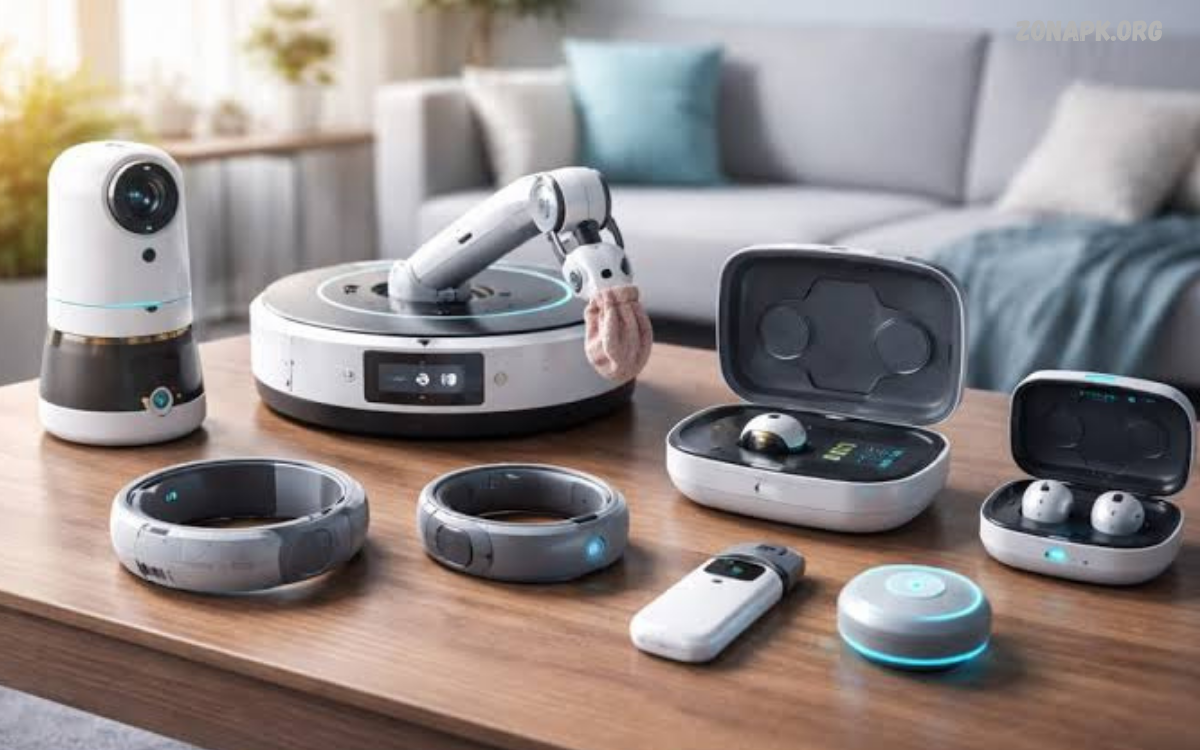
AI Gadgets are changing the way people interact with technology at home, at work, at school, on the road, and for entertainment. These intelligent devices combine artificial intelligence with modern hardware to understand commands, recognize patterns, automate tasks, and provide personalized assistance.
From smart glasses and AI-powered earbuds to intelligent cameras, wearable devices, robotic assistants, and smart home products, AI Gadgets are becoming increasingly useful. Their ability to process information and respond intelligently makes everyday technology more convenient and interactive.
What Are AI Gadgets?
AI Gadgets are electronic devices that use artificial intelligence to perform tasks that traditionally require human input. These devices can analyze information, recognize speech, identify objects, understand images, learn user preferences, and provide automated responses.
Unlike conventional electronic devices, AI Gadgets can use software-based intelligence to adapt to different situations. Depending on their design, they may connect to cloud services, smartphones, sensors, cameras, microphones, or dedicated AI processors.
How Do AI Gadgets Work?
AI Gadgets generally combine sensors, processors, software, connectivity, and artificial intelligence models. Sensors collect information from the surrounding environment while processors analyze data and software determines how the device should respond.
For example, an AI-powered camera can identify objects within an image, while an AI earbud can process voice commands. Some devices perform AI processing locally, whereas others rely on connected cloud services for more advanced computing capabilities.
Key Features of AI Gadgets
One important feature of AI Gadgets is intelligent automation. Devices can perform repetitive actions based on user preferences, environmental information, or predefined conditions. This reduces manual interaction and creates smoother technology experiences.
Another major feature is natural interaction. Voice recognition, image recognition, gesture detection, and contextual responses allow users to communicate with devices more naturally. These capabilities make AI technology accessible across many everyday applications.
AI Gadgets for Smart Homes
AI Gadgets have become an important part of modern smart homes. Intelligent speakers, cameras, displays, thermostats, lighting systems, and security devices can work together to automate household tasks and provide information.
Smart home gadgets can respond to voice commands, detect activity, monitor environments, and adjust settings according to user preferences. Connected devices can also provide notifications when unusual activity or specific events are detected.
AI-Powered Wearable Gadgets
Wearable technology is another rapidly developing area for AI Gadgets. Smartwatches, fitness trackers, smart rings, and other wearable devices can collect information and use intelligent software to provide personalized insights.
AI-powered wearables can assist with activity tracking, notifications, communication, navigation, and other everyday functions. Their compact designs allow intelligent features to remain accessible without requiring users to carry larger devices.
AI Smart Glasses
AI smart glasses combine wearable computing with cameras, microphones, speakers, sensors, and artificial intelligence. Depending on the model, they can provide voice assistance, capture photos, record videos, translate information, or offer contextual support.
These devices can create a more hands-free technology experience. Instead of constantly looking at a smartphone, users may interact with selected digital functions through voice commands or information presented through the glasses.
AI Earbuds and Headphones
AI-powered earbuds and headphones are becoming more than simple audio accessories. Modern models can include voice assistants, adaptive audio features, noise management, translation capabilities, and intelligent interaction options.
Some AI Gadgets in this category can respond to voice commands while users are traveling, working, or exercising. Intelligent audio processing can also help improve communication and personalize the listening experience.
AI Gadgets for Productivity
AI Gadgets can support productivity by helping users organize information, communicate, record ideas, and complete routine tasks. Devices with microphones, cameras, displays, or voice assistants can make information easier to capture and access.
For professionals and students, AI-enabled devices can support note-taking, reminders, scheduling, communication, and information retrieval. The practical value depends on the device’s features, software capabilities, and compatibility with other platforms.
AI Gadgets for Students
Students can use AI Gadgets for learning, organization, research, language practice, and accessibility. Smart devices can provide interactive assistance and help students access information through voice, text, images, or other interfaces.
AI technology can also support personalized learning experiences. However, students should use intelligent tools as learning aids rather than relying on them to replace independent thinking, reading, problem-solving, and original work.
AI Gadgets for Professionals
Professionals can benefit from AI Gadgets designed for communication, organization, productivity, and field-specific tasks. Smart devices can help capture information, manage notifications, support meetings, and simplify repetitive workflows.
For people working remotely or traveling frequently, compact AI devices can provide convenient access to digital assistance. Integration with smartphones, computers, cloud services, and workplace applications can further expand their usefulness.
AI Gadgets for Entertainment
Entertainment is another major area where AI Gadgets are becoming increasingly common. Intelligent televisions, speakers, headphones, gaming accessories, cameras, and other devices can personalize experiences and provide interactive features.
AI can analyze preferences and behavior to improve recommendations, audio experiences, visual content, and device interactions. These features can make entertainment systems more responsive without requiring constant manual adjustments.
AI Gadgets for Travel
Travelers can use AI Gadgets for navigation, communication, translation, photography, and organization. Smart earbuds and glasses can provide hands-free assistance, while intelligent cameras can help users capture and organize travel memories.
Translation features are particularly useful when communicating in unfamiliar languages. Navigation and voice-assistance functions can also reduce the need to repeatedly check a smartphone while walking through unfamiliar locations.
AI Cameras and Security Gadgets
AI-powered cameras can analyze visual information and identify specific patterns or events. Smart security cameras may detect movement, recognize selected objects, and send notifications when activity meets particular conditions.
These capabilities can improve awareness around homes and other spaces. At the same time, users should carefully review privacy settings, data storage policies, access permissions, and security controls before installing connected cameras.
AI Gadgets for Health and Fitness
Wearable AI Gadgets can help users monitor activity and develop awareness of everyday habits. Smartwatches, fitness trackers, and other wearable devices can collect information such as movement and exercise-related measurements.
AI-based analysis can turn collected information into trends or personalized insights. These devices can be useful for general wellness and activity tracking, but their measurements should not automatically be treated as professional medical assessments.
AI Gadgets and Voice Assistants
Voice interaction is one of the most recognizable applications of artificial intelligence in consumer gadgets. Devices with microphones can process spoken commands and perform supported actions without requiring traditional buttons or touch controls.
Voice assistants can help users search for information, control compatible devices, create reminders, or manage basic tasks. Effective performance depends on microphone quality, software support, internet connectivity, language compatibility, and environmental conditions.
AI Gadgets and Personalization
Personalization allows AI Gadgets to adapt certain functions according to individual preferences. Intelligent software can analyze patterns and use those patterns to customize recommendations, notifications, settings, or interactions.
Personalization can make devices more convenient because users may spend less time changing settings manually. However, personalization often involves collecting or processing user information, making privacy controls an important part of the overall experience.
AI Gadgets and Privacy
Privacy is an important consideration when purchasing AI Gadgets. Devices equipped with cameras, microphones, location services, or cloud connectivity may process information that users consider personal or sensitive.
Before using an AI device, users should review permissions, privacy settings, data retention policies, and account security options. Strong passwords, software updates, and limited permissions can also help reduce unnecessary exposure.
Read Also: AI News 2026: Latest Artificial Intelligence Developments, Trends and Updates
AI Gadgets and Data Security
Data security is closely connected with privacy. Connected AI Gadgets can communicate with smartphones, networks, cloud platforms, and other services, creating multiple points where security protections are important.
Users should keep device software updated and avoid unnecessary third-party applications or services. Choosing products from established manufacturers with clear security policies can also help users understand how information is handled.
Benefits of AI Gadgets
AI Gadgets can provide convenience, automation, personalization, accessibility, and faster interaction. Their ability to understand voice, images, patterns, and contextual information allows technology to perform tasks with less manual input.
Another benefit is hands-free interaction. Users can communicate with compatible devices while performing other activities. AI features can also help simplify complex information and provide useful assistance across different environments.
Limitations of AI Gadgets
AI Gadgets are not perfect and can produce inaccurate results. Artificial intelligence systems depend on the quality of their software, training data, sensors, connectivity, and processing capabilities.
Battery life, compatibility, subscription requirements, privacy concerns, internet dependence, and device cost can also affect the overall experience. Users should evaluate practical requirements instead of choosing a gadget solely because it includes an AI feature.
Choosing the Right AI Gadget
Selecting an AI Gadget should begin with identifying the task the device needs to perform. Buyers should consider whether they need assistance with communication, entertainment, productivity, fitness, travel, photography, home automation, or another specific activity.
Important factors include compatibility, battery life, privacy controls, software support, durability, connectivity, and long-term updates. Comparing features against actual needs can help prevent unnecessary purchases and improve the usefulness of the device.
AI Gadgets and Smartphone Integration
Smartphones remain central to many AI Gadgets because they provide connectivity, applications, settings, storage, and additional processing capabilities. Companion applications can allow users to configure devices and access collected information.
Integration can also enable communication between multiple devices. For example, a wearable may receive smartphone notifications while an AI home device can interact with other connected products through a shared ecosystem.
AI Gadgets and Future Technology
The future of AI Gadgets is likely to involve smaller processors, improved sensors, stronger on-device AI capabilities, and more natural human-computer interaction. Devices may become increasingly capable of understanding context while requiring less direct input.
AI technology may also become more integrated into everyday objects. Instead of AI appearing only in dedicated products, intelligent features may increasingly become standard components of household, wearable, automotive, educational, and professional technology.
On-Device AI in Modern Gadgets
On-device AI allows certain artificial intelligence processing to happen directly on a gadget instead of sending every request to a remote server. This approach can reduce dependence on internet connectivity for supported features.
Local processing may also provide faster responses and can offer privacy advantages because some information can remain on the device. However, capabilities depend on the processor, software optimization, available memory, and specific AI models supported by the product.
AI Gadgets and Accessibility
AI Gadgets can provide useful accessibility features for people who interact with technology in different ways. Voice controls, object recognition, transcription, translation, and intelligent assistance can reduce barriers in certain situations.
Accessibility-focused AI features can also improve interaction with digital information. As technology develops, more manufacturers are incorporating intelligent assistance into mainstream products rather than limiting these capabilities to specialized equipment.
AI Gadgets for Everyday Convenience
The biggest advantage of AI Gadgets may be their ability to simplify ordinary tasks. From controlling connected devices to managing notifications, capturing information, or providing voice assistance, intelligent technology can reduce repetitive interactions.
The usefulness of an AI Gadget ultimately depends on how well its features match the user’s routine. A simple device that performs one important task reliably can provide more practical value than a complicated product with features that rarely get used.
The Importance of Responsible AI Gadget Use
Responsible use of AI Gadgets involves understanding what the device can do, what information it collects, and where that information may be processed. Users should avoid granting unnecessary permissions and should regularly review device settings.
It is also important to verify important information instead of automatically accepting every AI-generated response. AI Gadgets are useful technological tools, but human judgment remains important when making decisions based on their outputs.
Frequently Asked Questions
What are AI Gadgets?
AI Gadgets are smart electronic devices that use artificial intelligence to understand information, automate tasks, recognize patterns, or respond to users. Examples include smart glasses, earbuds, watches, cameras, speakers, and home devices.
Are AI Gadgets useful for everyday life?
Yes, AI Gadgets can support everyday activities such as communication, entertainment, organization, navigation, home automation, fitness tracking, and information access. Their usefulness depends on the features and the user’s specific needs.
Do AI Gadgets require the internet?
Some AI Gadgets require an internet connection for cloud-based services, while others can perform selected AI functions directly on the device. Internet requirements vary by product, software, and feature.
Are AI Gadgets safe to use?
AI Gadgets can generally be used safely when users follow manufacturer instructions and maintain appropriate privacy and security settings. Users should review permissions and understand how connected devices process personal information.
Can AI Gadgets replace smartphones?
Most AI Gadgets are designed to complement smartphones rather than completely replace them. Some devices can perform specific functions independently, but smartphones still provide broader applications, connectivity, storage, and computing capabilities.
What should I consider before buying an AI Gadget?
Consider the device’s purpose, compatibility, battery life, privacy controls, security features, software support, connectivity, durability, and overall cost. Choose features that provide practical value for your everyday needs.
Conclusion
AI Gadgets are bringing artificial intelligence into everyday technology through smart wearables, home devices, cameras, audio products, productivity tools, and connected accessories.
As AI hardware and software continue to develop, these devices may become more personalized, efficient, compact, and capable. Understanding their features, limitations, privacy requirements, and practical applications can help users make informed decisions as they explore the growing world of AI Gadgets.

1 Comment
Pingback: AI Tools: A Complete Guide to Modern Artificial Intelligence Tools - Zonapk