

A smartphone camera lens plays an important role in modern mobile photography. It controls how light enters the camera system and helps the sensor capture detailed photos and videos. Different lens designs support wide scenes, distant subjects, portraits, close-up photography, and creative effects.
Modern smartphones often include multiple cameras with specialized lenses. Understanding smartphone camera lenses helps users choose suitable settings, accessories, and photography techniques.
What Is a Smartphone Camera Lens?
A smartphone camera lens is an optical component positioned above the camera sensor. Its primary function is to collect and focus incoming light onto the sensor, allowing the phone to produce an image. Optical design, aperture, focal length, and lens construction influence image quality.
A smartphone camera lens works together with the image sensor, aperture, autofocus system, image signal processor, and camera software. These components process incoming light and convert it into a digital photograph. Better coordination between hardware and software can improve sharpness, exposure, colors, and overall image detail.
How Does a Smartphone Camera Lens Work?
When light enters a smartphone camera, it passes through the lens elements before reaching the image sensor. The lens bends and focuses light to create an optical image on the sensor surface. The sensor then converts this light information into digital data for processing.
Camera software analyzes the captured information and applies computational photography techniques. These can include exposure adjustment, noise reduction, HDR processing, sharpening, stabilization, and color correction. The final photograph therefore depends on both optical performance and software processing.
Types of Smartphone Camera Lens
Smartphone manufacturers use different lens configurations to provide multiple photography capabilities. Common options include wide-angle, ultra-wide, telephoto, periscope, macro, and depth-oriented camera systems. Each design has a specific purpose and viewing angle.
A multi-camera smartphone can automatically select a suitable lens based on the selected camera mode and zoom level. Users can also manually switch between available lenses on many devices. Understanding these lens types helps photographers select the right camera for different situations.
Wide-Angle Smartphone Camera Lens
A wide-angle smartphone camera lens is commonly used as the primary camera on modern smartphones. It provides a balanced field of view suitable for everyday photography, portraits, landscapes, buildings, food, and street scenes. Wide lenses generally offer a natural perspective compared with more extreme focal lengths.
The primary camera often includes a larger sensor and wider aperture than secondary cameras. This combination can improve low-light performance and image detail. For everyday photography, the main wide-angle lens is usually one of the most versatile cameras available on a smartphone.
Ultra-Wide Smartphone Camera Lens
An ultra-wide smartphone camera lens captures a much larger field of view than a standard wide camera. It is useful for landscapes, architecture, group photos, travel scenes, and interiors where space is limited. Users can fit more subjects into a single frame without moving far away.
Ultra-wide lenses can introduce perspective distortion, particularly near the edges of an image. Modern smartphones use software correction to reduce visible distortion. Image quality can also vary between the center and edges, especially in challenging lighting conditions.
Telephoto Smartphone Camera Lens
A telephoto smartphone camera lens is designed for photographing distant subjects. It provides optical magnification without requiring the same level of digital enlargement used by traditional digital zoom. Telephoto cameras can be useful for portraits, travel photography, sports, wildlife, and architectural details.
Portrait photography benefits from telephoto lenses because they can create a more compressed perspective at suitable distances. Many smartphones combine telephoto optics with computational processing. This approach can produce detailed zoom images while maintaining a relatively compact phone design.
Periscope Smartphone Camera Lens
A periscope camera system uses a folded optical path to provide longer focal lengths inside a thin smartphone body. Instead of placing all lens elements directly above the sensor, the optical system redirects light through the phone using a prism or similar component.
Periscope systems are particularly useful for high-magnification photography. They allow smartphones to provide stronger optical zoom capabilities without requiring an extremely thick camera module. Image stabilization and software processing further improve results at long focal lengths.
Macro Smartphone Camera Lens
A macro smartphone camera lens is designed for close-up photography. It can capture small subjects such as flowers, textures, objects, and product details. Macro photography requires careful focusing because the distance between the lens and subject is very small.
Dedicated macro cameras vary significantly in quality between smartphones. Some devices instead use high-resolution primary cameras with close-focus capabilities and crop the image. Users should compare actual macro image quality rather than relying only on the presence of a macro camera.
Depth Camera and Lens Systems
Some smartphones use dedicated depth sensors or depth-oriented camera systems to improve subject separation. These systems help estimate the distance between the camera, subject, and background. The resulting information can support portrait modes and other computational photography features.
Modern smartphones can also estimate depth using multiple cameras, software algorithms, and machine learning. Dedicated depth hardware is therefore not required for every portrait system. The quality of background separation depends on the entire camera system rather than one lens alone.
Smartphone Camera Lens Focal Length
Focal length is an important specification that affects the field of view and perspective of a smartphone camera. A shorter focal length generally provides a wider view, while a longer focal length provides a narrower view with greater magnification.
Smartphone camera specifications often use 35mm-equivalent focal lengths for easier comparison. Users can use these values to understand whether a camera is designed for wide scenes, standard photography, portraits, or distant subjects.
Smartphone Camera Lens Aperture
Aperture determines how much light can enter the camera through the lens. A wider aperture can allow more light to reach the sensor, which may improve photography in darker environments. Aperture is commonly represented using an f-number such as f/1.8 or f/2.4.
A lower f-number represents a wider aperture. Aperture also influences depth of field, although smartphone photography relies heavily on computational processing for background blur. Sensor size, lens quality, stabilization, and software also affect low-light performance.
Smartphone Camera Lens and Image Quality
Lens quality directly affects how much detail reaches the camera sensor. Optical clarity, lens coatings, construction, alignment, and manufacturing precision can influence sharpness and contrast. A high-resolution sensor cannot fully compensate for poor optical performance.
Image quality also depends on sensor size and image processing. A smartphone with an excellent lens but a small sensor may produce different results from a device using a larger sensor. Photography performance should therefore be evaluated as a complete camera system.
Smartphone Camera Lens Coatings
Lens coatings help reduce reflections and improve light transmission through optical elements. Without appropriate coatings, internal reflections can create flare, ghosting, reduced contrast, or unwanted artifacts in certain lighting conditions.
High-quality optical coatings can help maintain contrast when photographing bright light sources. However, even advanced coatings cannot eliminate every optical artifact. The position of the light source, lens design, protective glass, and camera angle can all affect the final image.
Smartphone Camera Lens Protection
Protecting the camera lens can help maintain image quality and prevent scratches or damage. Dust, fingerprints, oil, and other contaminants on the camera cover can reduce clarity and create glare. Regular cleaning with a suitable soft microfiber cloth can help keep the camera area clear.
Camera lens protectors are available for many smartphones, but their optical quality varies. A poorly manufactured protector can introduce reflections, softness, or flare. Users should consider optical transparency and compatibility before installing any accessory over a camera lens.
Smartphone Camera Lens Cleaning
Cleaning a smartphone camera lens requires care because the external camera cover can collect fingerprints and dust. A clean microfiber cloth is generally suitable for removing everyday smudges. Avoid abrasive materials that could scratch the surface.
If the camera image appears unusually hazy, inspect the external lens cover before changing camera settings. Dirt and fingerprints can reduce contrast and create bright halos around lights. Keeping the camera module clean is one of the simplest ways to maintain consistent image quality.
Smartphone Camera Lens for Portrait Photography
Portrait photography often benefits from moderate telephoto focal lengths because they provide a natural-looking perspective at a comfortable shooting distance. A suitable lens can help keep facial proportions natural while creating useful separation between the subject and background.
Smartphone portrait modes also use computational depth estimation. Software identifies the subject and applies background blur to simulate a shallow depth of field. The final result depends on lens characteristics, subject separation, lighting, and the accuracy of the software.
Smartphone Camera Lens for Landscape Photography
Landscape photography usually benefits from wide or ultra-wide lenses. These lenses allow photographers to include mountains, buildings, roads, skies, and other large elements within one frame. A wider perspective can create a strong sense of space.
Ultra-wide cameras work particularly well when the foreground contains interesting details. Placing an object closer to the camera can create depth and visual scale. Photographers should also watch the edges of the frame because ultra-wide perspectives can exaggerate objects near the borders.
Smartphone Camera Lens for Low-Light Photography
Low-light photography depends on several camera components, including lens aperture, sensor size, stabilization, autofocus, and image processing. A wider aperture can provide more incoming light, while optical stabilization can reduce blur caused by camera movement.
Modern smartphones frequently use computational photography to improve night images. Multiple exposures can be combined to reduce noise and increase detail. However, moving subjects can remain challenging because combining frames may introduce motion artifacts.
Smartphone Camera Lens and Optical Zoom
Optical zoom changes the magnification using physical optical components rather than simply enlarging pixels digitally. A telephoto or periscope lens can provide optical magnification while preserving more detail than a basic digital crop.
Many smartphones combine optical zoom, sensor cropping, and computational processing to provide intermediate zoom levels. The quality of each zoom setting can vary. Users should examine the actual focal-length options instead of relying only on the maximum advertised zoom number.
Smartphone Camera Lens and Digital Zoom
Digital zoom enlarges an image using cropping and software processing. Traditional digital zoom can reduce visible detail because fewer sensor pixels represent the final subject. Modern computational photography can improve digital zoom results considerably.
The difference between optical and digital zoom becomes more noticeable at higher magnification levels. A dedicated telephoto or periscope camera can capture distant subjects with more optical information. Software can then refine the captured image for improved clarity.
Read Also: Bluetooth Selfie Stick: Complete Guide to Choosing, Using, and Buying the Right Model
Smartphone Camera Lens Stabilization
Camera stabilization helps reduce blur caused by small movements during photography and video recording. Optical image stabilization physically adjusts optical or sensor components to compensate for movement. Electronic stabilization uses software processing to reduce visible motion.
Stabilization is especially useful for handheld photography in low light and video recording. It does not completely eliminate motion blur from moving subjects because subject movement and camera movement are different problems. Good stabilization works best as part of a complete camera system.
Smartphone Camera Lens for Video Recording
A smartphone camera lens affects video framing, perspective, stabilization, and visual consistency. Wide lenses are useful for handheld recording, while telephoto lenses can capture distant subjects without physically moving closer.
Switching between lenses during video recording can create differences in color, exposure, sharpness, and stabilization. Premium smartphones often use software calibration to make transitions smoother. Lighting conditions can still influence how consistently different cameras perform.
Smartphone Camera Lens Accessories
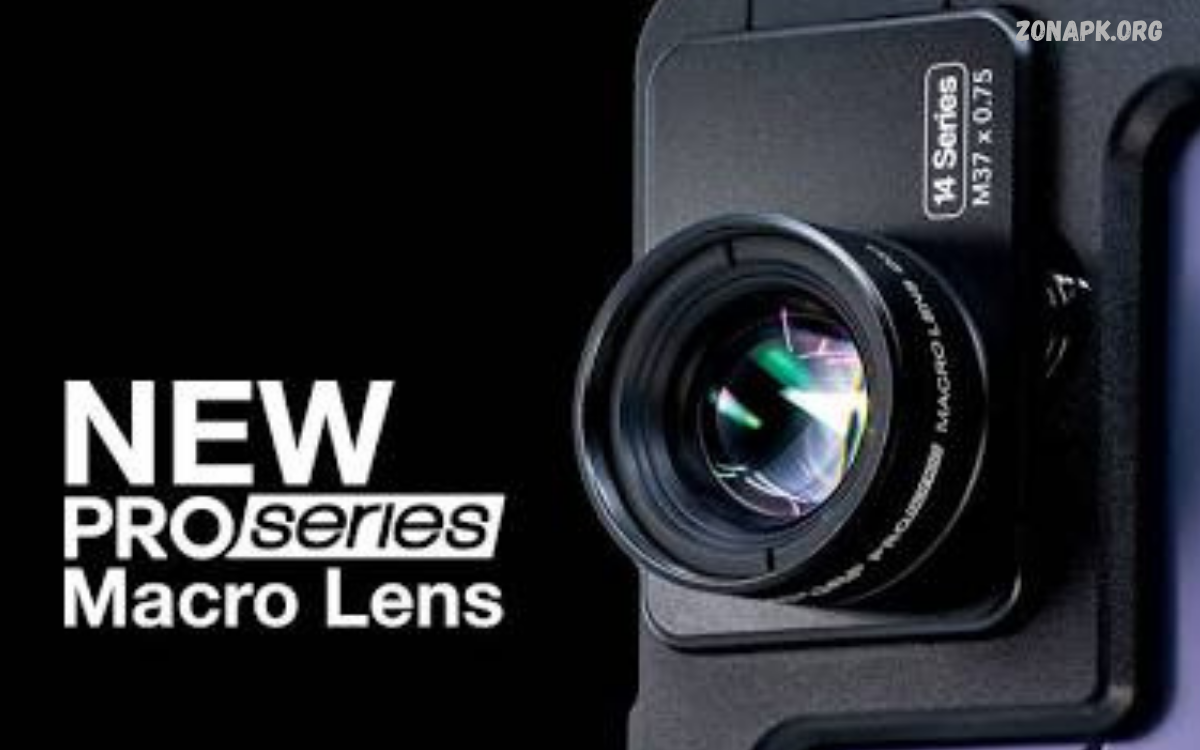
External smartphone camera lens accessories can provide additional creative options. Clip-on wide, macro, fisheye, and telephoto lenses are available for some phones. Their performance depends heavily on optical construction and compatibility with the phone’s existing camera.
External lenses should align accurately with the smartphone camera. Misalignment can cause dark corners, blur, distortion, or reduced sharpness. For serious photography, users should compare accessory quality carefully rather than choosing solely based on price.
How to Choose a Smartphone Camera Lens
Choosing a smartphone camera lens depends on the type of photography a user performs most often. Everyday users may benefit from a strong primary camera, while travelers may prefer a combination of ultra-wide and telephoto options.
Important specifications include focal length, aperture, sensor size, stabilization, autofocus, and optical construction. Camera software also deserves attention because modern smartphones rely heavily on computational photography to produce the final image.
Smartphone Camera Lens vs Smartphone Camera Sensor
The camera lens and image sensor perform different functions. The lens collects and focuses light, while the sensor converts that light into electrical signals that become digital image data. Both components influence final image quality.
A high-resolution sensor cannot automatically produce excellent photographs if the optical system is weak. Similarly, a high-quality lens cannot overcome every limitation of a small or low-performance sensor. The strongest camera systems balance optics, sensors, processing, and stabilization.
Common Smartphone Camera Lens Problems
Common lens-related problems include scratches, fingerprints, dust, condensation, flare, distortion, and reduced sharpness. Some issues originate from the external camera cover, while others can result from internal optical or hardware problems.
Users should first inspect and clean the camera area when image quality suddenly changes. Persistent blur, focusing problems, or unusual artifacts may indicate a hardware issue. Professional inspection can help identify problems that cannot be resolved through cleaning or software settings.
Tips for Better Smartphone Camera Lens Results
Keeping the lens clean is an easy first step toward better smartphone photography. Users should also select the appropriate lens for the subject instead of relying on excessive digital zoom. Good lighting and stable framing can improve results significantly.
Avoid covering the camera with fingers while shooting, especially when using large camera modules. Experimenting with different focal lengths can also improve composition. Understanding how each lens changes perspective helps users create more intentional photographs.
Future of Smartphone Camera Lens Technology
Smartphone camera technology continues to evolve through improved optics, larger sensors, advanced stabilization, and computational photography. Manufacturers are also developing compact optical systems capable of providing longer focal lengths within thin devices.
Future smartphone camera systems may combine sophisticated optical designs with increasingly advanced image processing. Improvements in artificial intelligence, sensor technology, autofocus, and stabilization can further expand mobile photography capabilities without requiring traditional camera equipment.
Frequently Asked Questions
What Is a Smartphone Camera Lens?
A smartphone camera lens is an optical component that collects and focuses light onto the image sensor. It determines important characteristics such as field of view, perspective, and the amount of light reaching the sensor.
Which Smartphone Camera Lens Is Best for Everyday Photography?
The primary wide-angle camera is generally designed for everyday photography. It provides a balanced field of view for common subjects such as people, food, travel scenes, buildings, and everyday moments.
What Does a Telephoto Smartphone Camera Lens Do?
A telephoto smartphone camera lens provides a narrower field of view and greater optical magnification. It is useful for distant subjects, portraits, travel details, and other situations where moving closer is difficult.
Is an Ultra-Wide Smartphone Camera Lens Useful?
An ultra-wide lens is useful when users need to capture a large scene. It can work well for landscapes, architecture, group photographs, interiors, and travel photography.
How Can I Keep a Smartphone Camera Lens Clean?
A soft microfiber cloth can be used to gently remove fingerprints and smudges from the external camera cover. Cleaning the lens regularly can help maintain contrast and clarity.
Does a Smartphone Camera Lens Affect Photo Quality?
Yes. Lens design affects how much light reaches the sensor and how accurately the optical system forms an image. Sharpness, contrast, distortion, flare, and light transmission can all be influenced by lens quality.
What Is a Periscope Smartphone Camera Lens?
A periscope camera uses a folded optical path to provide longer focal lengths within a smartphone’s limited internal space. A prism or similar optical element redirects light through the camera module.
Can a Smartphone Camera Lens Be Replaced?
The camera lens or external camera cover may be replaceable depending on the smartphone design and type of damage. Replacement procedures vary considerably between devices.
Does Camera Lens Size Matter?
Lens size can influence optical performance, light transmission, and the physical design of the camera system. Larger optical components can provide advantages, but size alone does not determine image quality.
How Can I Get Better Photos With a Smartphone Camera Lens?
Keep the lens clean, use suitable lighting, choose the correct focal length, and avoid unnecessary digital zoom. Stabilize the phone when shooting in low-light conditions and use the primary camera when maximum image quality is needed.
Conclusion
A smartphone camera lens is a fundamental part of mobile photography. It controls how light enters the camera and influences field of view, perspective, sharpness, magnification, and overall image characteristics
Understanding wide-angle, ultra-wide, telephoto, periscope, and macro systems helps users make better photography decisions. By keeping the camera lens clean, selecting suitable focal lengths, using stable framing, and understanding optical zoom, smartphone users can achieve better results from their devices.
