

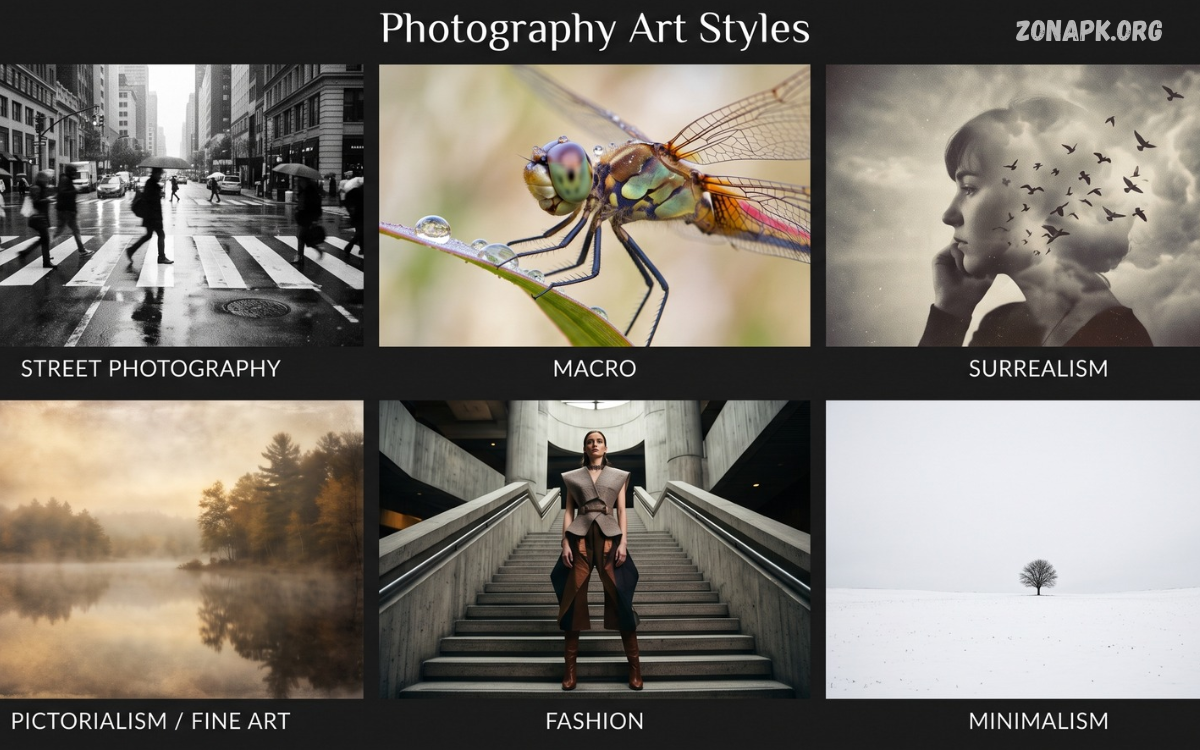
Photography transforms ordinary moments into extraordinary visual experiences. Different photography art styles help photographers express emotions, capture beauty, communicate stories, and present familiar subjects from fresh perspectives.
Understanding photography art styles helps beginners discover their preferences and experienced photographers refine their artistic identity. Whether you enjoy landscapes, portraits, street scenes, abstract images, or experimental photography, learning different approaches can improve your skills and inspire original work.
What Are Photography Art Styles?
Photography art styles describe distinctive visual approaches photographers use to create meaningful images. These approaches involve lighting, composition, color, subject selection, perspective, texture, and editing techniques.
The keyword Photography Art Styles covers traditional genres and modern creative approaches. Some styles emphasize realism, while others focus on imagination, emotion, symbolism, or visual experimentation.
Importance of Photography Art Styles
Photography art styles help photographers develop recognizable creative identities. Consistent choices involving lighting, colors, framing, and subjects can make a portfolio feel connected and memorable.
Learning multiple styles encourages experimentation and improves visual understanding. Photographers can discover new ways to use natural light, arrange subjects, capture movement, and emphasize details.
Fine Art Photography
Fine art photography treats photographs as creative expressions rather than simple records of reality. Photographers carefully select subjects, lighting, colors, and composition to communicate personal ideas, emotions, or philosophical concepts.
This style encourages photographers to develop original concepts before capturing images. Planning, experimentation, and thoughtful editing help transform creative ideas into meaningful photographs for galleries, portfolios, and personal collections.
Portrait Photography
Portrait photography focuses on people, personalities, expressions, and human connections. Photographers use facial expressions, body language, backgrounds, and lighting to communicate character and create engaging images.
Creative portrait photography includes dramatic studio portraits, candid expressions, lifestyle sessions, and artistic self-portraits. Soft window light creates a gentle atmosphere, while directional lighting produces stronger shadows and contrast.
Landscape Photography
Landscape photography captures natural environments, including mountains, forests, rivers, beaches, deserts, and open countryside. Photographers use composition, natural lighting, weather conditions, and perspective to highlight the beauty of a location.
Golden hour and blue hour provide distinctive lighting opportunities for landscape photographers. Tripods help maintain stability during long exposures, especially when photographing flowing water or working in low-light conditions.
Street Photography
Street photography documents everyday life in public spaces, capturing spontaneous moments, urban environments, human interactions, and unexpected visual patterns. Markets, sidewalks, public transport, and busy intersections provide countless creative opportunities.
Strong street photographs often combine timing, composition, emotion, and environmental details. Contrasting colors, geometric buildings, reflections, shadows, and candid gestures can make ordinary scenes visually compelling.
Black and White Photography
Black and white photography removes color from the visual equation, emphasizing light, shadow, texture, shape, and tonal contrast. This approach can create timeless portraits, dramatic architectural images, and atmospheric landscapes.
Successful monochrome photography requires careful attention to tonal separation. During editing, photographers can adjust highlights, shadows, contrast, and brightness to produce balanced results while preserving important details.
Minimalist Photography
Minimalist photography uses simplicity to communicate powerful visual ideas. Images often contain one dominant subject, clean backgrounds, limited colors, and generous negative space.
This style rewards careful observation and thoughtful framing. Photographers remove unnecessary distractions by changing their position, choosing uncluttered backgrounds, or using suitable focal lengths to create balanced compositions.
Abstract Photography
Abstract photography focuses on shapes, patterns, colors, textures, and visual relationships rather than recognizable subjects. Rippling water, reflected lights, textured surfaces, and architectural details can become intriguing artistic compositions.
Photographers can create abstract images through macro lenses, unusual perspectives, reflections, intentional camera movement, or selective focus. Experimenting with light and distance reveals unexpected patterns in ordinary surroundings.
Macro Photography
Macro photography reveals small subjects and intricate details that people might overlook during everyday activities. Insects, flower petals, water droplets, fabric fibers, and miniature objects become fascinating photographic subjects.
Sharp focus and controlled lighting are especially important in macro photography. A stable camera, suitable macro lens, diffused lighting, and careful focusing techniques help capture intricate details with greater clarity.
Fashion Photography
Fashion photography combines clothing, styling, poses, lighting, and visual storytelling to communicate a particular aesthetic. Images may showcase designer collections, everyday outfits, accessories, or experimental fashion concepts.
Successful fashion photography requires collaboration between photographers, models, stylists, makeup artists, and creative directors. Location selection, wardrobe coordination, posing, and lighting establish the intended atmosphere.
Documentary Photography
Documentary photography records real people, events, environments, and social experiences to communicate stories through authentic visual evidence. Photographers may document community traditions, cultural practices, environmental changes, or significant historical moments.
Accuracy and ethical responsibility are essential in documentary photography. Building trust with subjects, understanding the surrounding context, and presenting photographs respectfully can strengthen a documentary project’s credibility.
Wildlife Photography
Wildlife photography captures animals in their natural habitats, highlighting behavior, movement, environmental relationships, and distinctive physical features. Birds, mammals, reptiles, and marine animals provide diverse photographic opportunities.
Long focal-length lenses help photographers capture distant subjects without approaching too closely. Fast shutter speeds can freeze movement, while continuous autofocus improves tracking when animals change direction.
Architectural Photography
Architectural photography explores buildings, interiors, structural details, and the relationship between designed spaces and their surroundings. Modern skyscrapers, historic monuments, residential interiors, and industrial structures offer opportunities to study geometry, symmetry, lines, and textures.
Wide-angle lenses are useful for capturing interiors and expansive structures, although photographers must manage perspective distortion. Carefully selected camera positions, natural window light, symmetrical framing, and reflections can strengthen architectural compositions.
Food Photography
Food photography presents meals, ingredients, beverages, and culinary experiences through appealing visual compositions. Restaurant menus, cooking blogs, recipe websites, and social media campaigns frequently use this style.
Natural window light often creates soft shadows and realistic colors, while reflectors help brighten darker areas. Simple styling, controlled highlights, and thoughtful prop selection keep attention on the food.
Read Also: Creative Digital Artwork: A Complete Beginner’s Guide
Product Photography
Product photography showcases objects through clear, attractive, and informative images. Electronics, clothing accessories, cosmetics, furniture, and handmade products benefit from careful planning.
A clean background helps viewers concentrate on a product’s shape and details. Soft lighting reduces harsh reflections, while consistent framing and accurate colors improve images for online stores and advertising campaigns.
Long Exposure Photography
Long exposure photography records movement over an extended period, transforming moving elements into smooth shapes, flowing patterns, or luminous trails. Waterfalls become silky, clouds form streaks, and vehicle lights create bright lines across nighttime streets.
A tripod keeps the camera steady during longer shutter speeds, while a remote release reduces unwanted movement. Neutral density filters help control incoming light during daylight exposures, allowing photographers to experiment with movement and atmosphere.
Surreal Photography
Surreal photography combines recognizable subjects with unexpected visual elements to create dreamlike, imaginative, or mysterious scenes. Floating objects, unusual proportions, impossible environments, and unexpected combinations can challenge viewers’ expectations.
Photographers can produce surreal images through carefully arranged scenes, multiple exposures, creative camera techniques, or digital compositing. Consistent lighting, matching perspectives, and realistic shadows help combined elements appear visually convincing.
Fine Art Still Life Photography
Still life photography focuses on inanimate subjects arranged deliberately within a frame. Flowers, books, fruit, glassware, antiques, and everyday objects can form elegant compositions with carefully controlled lighting and spacing.
The arrangement should guide the viewer’s attention toward the most important objects. Complementary colors, contrasting textures, directional light, and balanced negative space can strengthen the composition and communicate artistic ideas.
Double Exposure Photography
Double exposure photography combines two images into one visual composition, often blending a portrait with a landscape, trees, city lights, or textured surroundings. The overlapping images can suggest memories, identity, dreams, or connections between people and nature.
Some cameras offer in-camera multiple exposure settings, while editing software allows more precise control over image blending. Choosing images with complementary shapes, tones, and details usually produces a clearer and more visually engaging result.
Cinematic Photography
Cinematic photography borrows visual techniques from filmmaking to create photographs that feel like moments from a larger story. Atmospheric lighting, deliberate framing, dramatic colors, and expressive subjects contribute to this style.
Photographers often use controlled color grading, directional light, and carefully selected backgrounds to establish a film-inspired atmosphere. Consistency between lighting, color, and subject matter helps create a cohesive cinematic portfolio.
Vintage Photography
Vintage photography recreates or preserves the visual character associated with older photographic processes and historical periods. Faded colors, gentle contrast, visible grain, warm tones, and subtle imperfections can evoke nostalgia.
Creating convincing vintage images requires more than applying a preset. Photographers should consider the subject, lighting, color palette, and historical references that support the intended mood.
Travel Photography
Travel photography combines landscapes, architecture, cultural experiences, food, people, and local details to communicate the character of a destination. A strong travel portfolio moves beyond famous landmarks by including everyday activities, distinctive textures, and local markets.
Planning around weather, seasonal changes, and available daylight can improve travel photographs. Photographers should research local customs, seek permission when appropriate, and represent communities respectfully.
Sports Photography
Sports photography captures athletic movement, competition, emotion, and important moments during sporting events. Football matches, basketball games, running competitions, and outdoor adventures require quick reactions and accurate timing.
Fast shutter speeds help freeze rapid action, while continuous autofocus keeps moving subjects sharp. Anticipating important moments and selecting suitable backgrounds can help photographers produce more engaging sports images.
Creative Smartphone Photography
Smartphone photography makes artistic exploration accessible without requiring an expensive camera. Modern phones provide portrait modes, adjustable exposure, wide-angle lenses, and advanced editing features.
Good smartphone photography depends on light, composition, focus, and timing rather than equipment alone. Cleaning the lens, avoiding excessive digital zoom, and experimenting with reflections and unusual angles can improve results.
How to Choose the Right Photography Art Style
Choosing a photography art style begins with identifying subjects and visual experiences that genuinely interest you. Nature lovers may enjoy wildlife and landscape photography, while people interested in design might prefer architecture, fashion, or minimalist compositions.
Consider your available equipment, preferred environments, and creative goals before selecting a primary style. Exploring several genres helps reveal which subjects and techniques feel most rewarding and encourages creative development.
Essential Techniques for Better Artistic Photography
Strong artistic photography begins with understanding composition, lighting, perspective, and focus. The rule of thirds, leading lines, symmetry, framing, and negative space provide useful starting points for creating balanced and engaging images.
Lighting also shapes the atmosphere of a photograph. Experimenting with different times of day, camera angles, and exposure settings develops technical confidence and helps photographers understand how small adjustments can change an image’s emotional impact.
Photography Art Styles and Photo Editing
Photo editing helps photographers refine the colors, contrast, exposure, and overall atmosphere of their images. Applications such as Lightroom, Snapseed, and Photoshop offer tools for adjusting brightness, correcting colors, cropping photographs, and removing minor distractions.
Consistency matters when editing a collection of photographs. A restrained color palette may suit minimalist work, while monochrome conversion can strengthen texture and contrast in fine art images.
Common Photography Art Style Mistakes
One common mistake is copying popular visual trends without developing a personal perspective. Studying other photographers can provide inspiration, but meaningful progress comes from experimenting, observing surroundings, and making independent creative decisions.
Another mistake is overlooking composition, lighting, or the story behind an image. Reviewing photographs critically, learning from unsuccessful attempts, and asking for constructive feedback can help photographers improve their skills and create more intentional work.
Frequently Asked Questions
What Are the Most Popular Photography Art Styles?
Popular photography art styles include portrait, landscape, street, fine art, fashion, wildlife, macro, abstract, documentary, and architectural photography. Each approach offers different creative possibilities, allowing photographers to explore subjects ranging from human emotion and natural scenery to textures, patterns, and everyday experiences.
Which Photography Art Style Is Best for Beginners?
Smartphone photography, landscape photography, still life, and minimalist photography are accessible starting points for beginners. These styles allow newcomers to practice composition, lighting, focus, and perspective without purchasing specialized equipment.
Can One Photographer Use Multiple Photography Art Styles?
Yes, photographers can explore several styles and combine techniques to create distinctive images. A landscape photographer might experiment with long exposures, while a portrait photographer could incorporate surreal compositions or cinematic lighting.
What Equipment Is Needed for Artistic Photography?
A smartphone or basic digital camera is enough to begin exploring artistic photography. A stable tripod, suitable lens, reflector, or external light can expand creative options as skills improve.
How Can I Develop My Own Photography Art Style?
Developing a personal style requires consistent practice, careful observation, and experimentation with subjects, lighting, composition, and editing. Studying inspiring photographs and creating original projects helps reveal recurring preferences and creative strengths.
Conclusion
Photography art styles offer countless ways to transform ordinary subjects into expressive visual experiences.
The most effective way to improve is to experiment with different techniques, practice regularly, and learn from every photograph you take.

1 Comment
Pingback: Beautiful Artwork Photography: A Complete Guide - Zonapk