

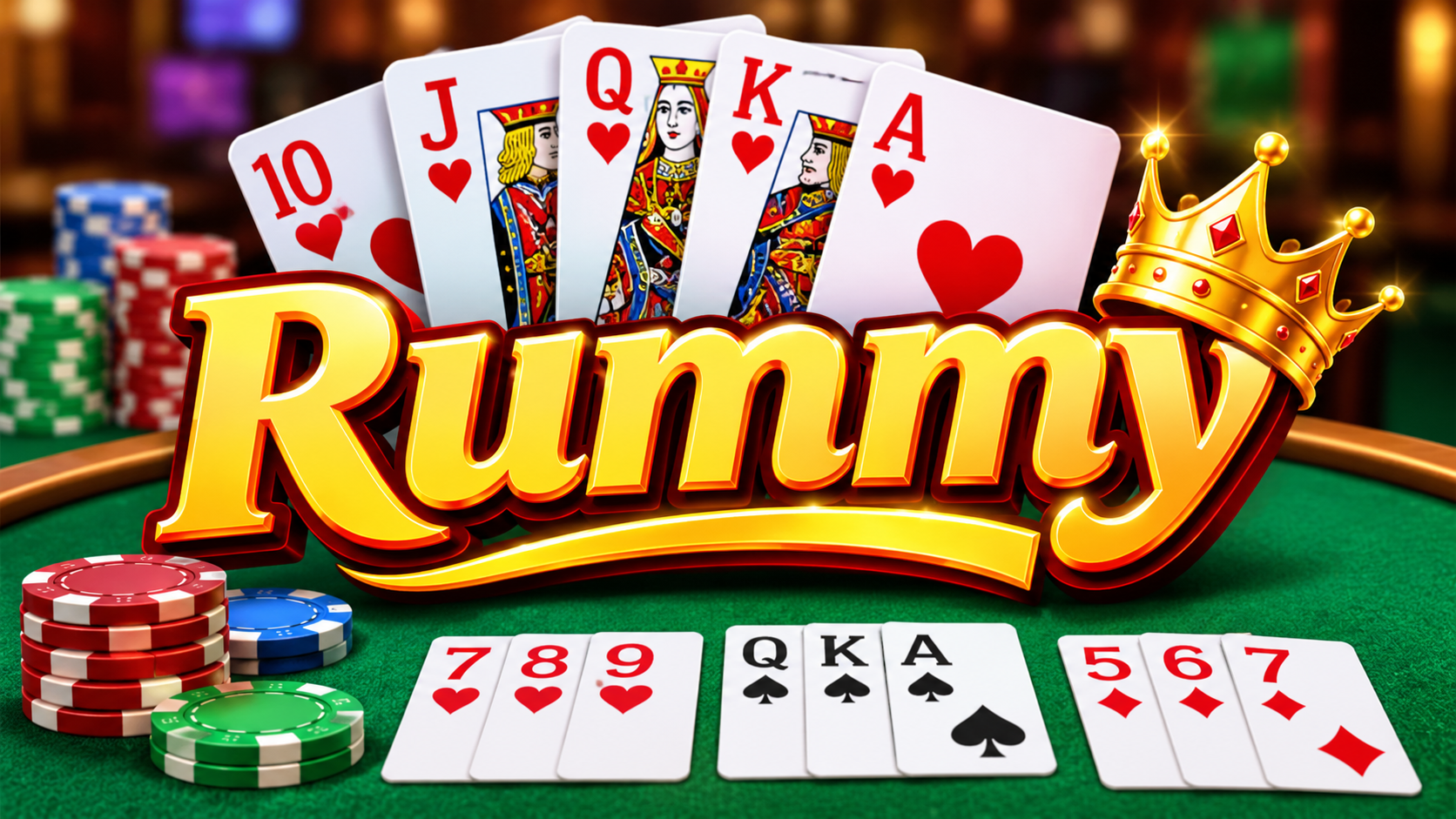
Rummy is one of the most recognised card games, enjoyed by people who like card combinations, logical thinking and strategic decision-making. The game has different variations, but the basic objective generally remains the same: arrange cards into valid sequences and sets before making a declaration. Beginners often search for All Rummy information because they want to understand different formats, card combinations and the basic rules.
The popularity of rummy comes from its simple structure and the different decisions involved in every round. Players must understand the cards in their hands, observe discarded cards and decide which combinations they want to complete.
What Is All Rummy?
The term All Rummy can refer to different rummy formats, variations and informational resources available online. Traditional Indian Rummy commonly uses 13 cards per player. The objective is to organise those cards into valid sequences and sets.
A sequence consists of consecutive cards belonging to the same suit. A set contains cards of the same rank but different suits. Understanding these combinations is essential for anyone learning the game.
Players interested in exploring different rummy-related topics can visit
for information about rummy games and related subjects.
Understanding the Basic Rules of Rummy
In a common 13-card Indian Rummy format, each player receives 13 cards. During a turn, a player draws one card from either the closed deck or the open discard pile and then discards one card.
The process continues until a player arranges all 13 cards into valid combinations and makes a declaration.
The important combinations include:
- Pure sequence: Three or more consecutive cards of the same suit without using a joker as a substitute.
- Impure sequence: A sequence that uses a joker to complete a missing card.
- Set: Three or four cards of the same rank from different suits.
A valid declaration generally requires at least two sequences, including one pure sequence. Specific rules can differ between variations, so players should always check the rules of the format they are studying.
Different Types of Rummy Games
There are several variations of rummy top . Some popular formats include points rummy, pool rummy and deals rummy.
Points Rummy generally involves individual rounds in which points determine the result. Pool Rummy involves accumulating points across multiple rounds, while Deals Rummy uses a fixed number of deals.
Other variations may have different card counts, scoring systems and rules. Understanding the format before participating helps avoid confusion.
For additional information about different rummy-related formats, readers can explore
.
Why Are Sequences Important?
Sequences are the foundation of Indian Rummy. A pure sequence is particularly important because it is generally compulsory for a valid declaration.
For example, 4♥, 5♥ and 6♥ form a pure sequence. Similarly, 8♠, 9♠ and 10♠ form another valid sequence.
A player should learn to recognise possible combinations instead of selecting cards randomly. Proper organisation makes it easier to identify useful cards and understand which combinations remain incomplete.
Understanding the Role of Jokers
Jokers are special cards that can substitute for missing cards in certain combinations. Printed jokers and wild jokers are commonly used in Indian Rummy.
For example, if a player has 7♦, 8♦ and a joker, the joker may represent 9♦ to complete an impure sequence.
However, jokers cannot normally replace the compulsory pure sequence. Their use depends on the rules of the particular variation.
Learning Rummy Online
Digital platforms have made it easier to access information about card games. A beginner can read tutorials, understand the meaning of sequences and learn the differences between game formats.
Before using any online gaming service, check its ownership, security information, terms and applicable legal requirements. Online gaming laws vary by jurisdiction, and real-money gaming may be restricted or prohibited.
Readers looking for general information can also visit
.
Conclusion
All Rummy covers a broad range of card-game formats, rules and learning resources. Understanding sequences, sets, jokers and scoring systems provides a strong foundation for learning the traditional game. Rather than relying on assumptions, beginners should read the rules carefully and understand the differences between individual variations.
