

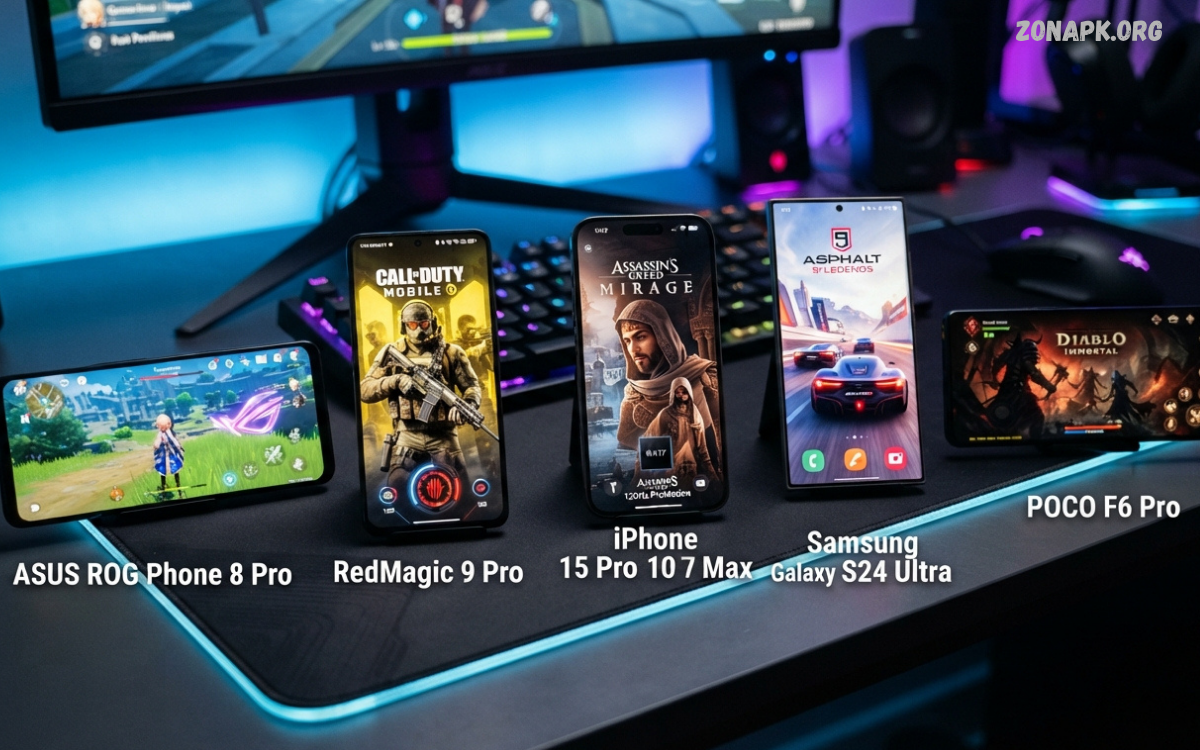
Gaming on smartphones has evolved from simple casual entertainment into a competitive experience requiring powerful hardware, responsive controls, advanced displays, and reliable battery performance.
Modern gaming smartphones are designed to handle demanding graphics while maintaining stable performance during extended sessions. A strong gaming phone should offer excellent processing power, sufficient RAM, fast storage, responsive touch controls, and effective thermal management.
What Makes the Best Smartphones for Gaming?
The Best Smartphones for Gaming need powerful internal hardware capable of handling demanding games at stable frame rates. A modern flagship processor provides the performance required for high-quality graphics, fast loading, advanced game physics, and multitasking.
Gaming performance also depends on thermal efficiency, display response, battery capacity, storage speed, and software optimization. A smartphone may have a powerful processor but still experience performance drops if heat management is poor.
Powerful Processor and GPU
A powerful processor is one of the most important components in a gaming smartphone. Flagship mobile chipsets are designed to deliver high CPU and GPU performance while supporting advanced graphics technologies. A strong processor helps games launch quickly, maintain consistent frame rates, and process complex environments without noticeable delays. For demanding gaming, users should prioritize modern high-performance chipsets rather than focusing only on the number of CPU cores.
The GPU plays an equally important role because gaming depends heavily on graphical processing. A capable GPU allows higher graphics settings, smoother animations, improved lighting effects, and better frame-rate stability. Players who regularly use demanding 3D games should choose a smartphone with a modern GPU and strong sustained performance. Benchmark results can provide useful information, but real-world gaming performance and thermal stability are equally important.
High Refresh Rate Display
A high refresh rate display can make gameplay feel smoother and more responsive. Many modern gaming smartphones offer 120Hz or higher refresh rates, allowing more frames to appear on the screen compared with traditional 60Hz panels. This advantage can be especially noticeable in fast-paced games where players need to react quickly to movement, opponents, and changing environments.
Display quality involves more than refresh rate alone. Brightness, resolution, touch sampling, color accuracy, response time, and panel technology can all influence the gaming experience. A good gaming smartphone should provide a responsive touch interface with minimal input delay. AMOLED and similar display technologies can also provide vibrant colors, deep contrast, and an immersive viewing experience for both gaming and entertainment.
Fast Touch Response and Gaming Controls
Touch responsiveness is extremely important for competitive mobile gaming. Fast touch response allows actions such as aiming, shooting, movement, and ability activation to register quickly. A high touch sampling rate can improve the feeling of responsiveness, although actual performance also depends on software optimization and the game itself. Players who enjoy competitive shooters should pay particular attention to touch response specifications.
Some gaming-focused smartphones include additional gaming controls, shoulder triggers, customizable touch zones, or enhanced vibration systems. These features can provide greater control in supported games and reduce dependence on traditional touchscreen inputs. However, a phone does not necessarily need physical gaming buttons to deliver excellent performance. A responsive touchscreen, accurate haptics, and optimized gaming software can provide a strong experience on conventional flagship smartphones.
Advanced Cooling System
Heat is one of the biggest challenges during extended smartphone gaming. When a processor becomes excessively hot, the device may reduce performance to protect internal components. This process, commonly associated with thermal throttling, can result in lower frame rates and inconsistent gameplay. The Best Smartphones for Gaming therefore require effective cooling systems that can maintain stable performance under heavy workloads.
Modern gaming phones may use vapor chambers, graphite layers, advanced thermal materials, and multi-layer cooling systems. Some models also support external cooling accessories for users who play demanding games for long periods. Good thermal management does not necessarily mean the phone will remain completely cool, but it can help distribute heat more effectively and reduce severe performance drops during extended gaming sessions.
Large Battery for Longer Gaming
Battery capacity is another major consideration when selecting a gaming smartphone. High-performance processors, bright displays, fast refresh rates, and demanding games can consume significant amounts of power. A larger battery can provide longer gaming sessions between charges, making it particularly useful for users who spend several hours playing games throughout the day.
Battery capacity should be considered together with power efficiency and charging technology. A phone with a highly efficient chipset may provide excellent endurance even with a smaller battery. Fast charging is also valuable because it can reduce the time required to recharge between gaming sessions. Players should also consider whether gaming while charging causes significant heat, as additional thermal load can affect sustained performance.
Fast Storage and Sufficient RAM
Modern mobile games can require substantial storage space, especially when high-resolution textures, additional maps, voice files, and updates are installed. Fast internal storage helps reduce loading times and improves the overall responsiveness of the smartphone. Users should consider choosing enough storage capacity to accommodate games, updates, applications, photos, videos, and other personal files without constantly managing available space.
RAM is equally important for multitasking and maintaining smooth system performance. A smartphone with sufficient RAM can keep games and frequently used applications available without constantly reloading them. However, more RAM does not automatically guarantee better gaming performance. Processor efficiency, software optimization, memory management, and storage speed all contribute to the overall experience.
Software Optimization for Gaming
Gaming performance depends heavily on software optimization. A smartphone with excellent hardware can still provide an inconsistent experience if its operating system does not manage resources efficiently. Gaming-focused software can prioritize CPU and GPU resources, control background applications, optimize network performance, and provide additional gaming tools. These features can help players achieve a smoother experience without manually adjusting multiple system settings.
Dedicated gaming modes are increasingly common across premium smartphones. These modes may block notifications, prioritize performance, monitor temperature, customize touch controls, and provide screen recording options. Some interfaces also include performance dashboards that display frame rates, temperature, network information, and battery status. Such features can be useful for players who want greater control over their gaming environment.
Best Smartphones for Gaming Performance
When evaluating the Best Smartphones for Gaming, performance should be considered across several categories rather than based on a single specification. Flagship smartphones often provide excellent gaming performance because they combine powerful processors, advanced GPUs, high-quality displays, fast storage, and premium cooling systems. These devices are suitable for users who want a balanced smartphone capable of handling gaming, photography, productivity, and entertainment.
Dedicated gaming smartphones can provide additional advantages for serious players. They may include specialized cooling systems, gaming triggers, larger batteries, high refresh-rate displays, and software designed specifically for gaming. Traditional flagship smartphones, however, can be more versatile for users who want strong gaming performance alongside premium cameras, refined designs, and broader everyday features.
Best Smartphones for Competitive Gaming
Competitive gaming requires more than raw processing power. Players need responsive touch controls, stable frame rates, low input latency, reliable network performance, and a display capable of showing fast movement clearly. A smartphone with strong sustained performance can provide an advantage during long competitive matches by reducing frame drops and maintaining consistent responsiveness.
Network stability is particularly important for online multiplayer games. Even a powerful smartphone cannot prevent poor gameplay caused by an unstable internet connection. Users should consider Wi-Fi performance, mobile network compatibility, antenna quality, and software network optimization. Combining reliable connectivity with a responsive display and powerful hardware creates a better environment for competitive gaming.
Best Smartphones for Battle Royale Games
Battle royale games place significant demands on smartphone hardware because they combine large maps, numerous players, detailed environments, real-time movement, and continuous network activity.
Battery life and thermal performance also matter during battle royale sessions. Long matches can increase power consumption and heat generation, especially at high brightness and high refresh rates. A smartphone with effective cooling and efficient power management can maintain a more consistent experience.
Read Also: Cheap Smartphones: Affordable Options for Every Budget
Best Smartphones for High Graphics Games
High graphics games benefit from powerful GPUs, modern displays, and efficient thermal management. Players who prefer maximum visual quality should select smartphones capable of running demanding games at higher graphical settings without significant frame-rate instability. High-resolution textures, advanced shadows, reflections, and detailed environments require considerable GPU resources.
A high-quality display can make these graphical improvements more noticeable. AMOLED panels with strong brightness and contrast can deliver immersive visuals, while high refresh rates can make movement appear smoother. However, users should balance graphical quality with performance because maximum settings are not always ideal for competitive gameplay. Stable frame rates can be more valuable than maximum visual quality in fast-paced games.
Best Smartphones for Long Gaming Sessions
Long gaming sessions require a combination of battery endurance, thermal efficiency, comfortable design, and stable performance. A smartphone that performs well for a short benchmark may not maintain the same level of performance after an hour or more of continuous gaming. Sustained performance is therefore an important factor when choosing a device for extended gameplay.
Ergonomics also matter because smartphones are handheld devices. A comfortable grip, balanced weight, suitable button placement, and manageable heat levels can make extended sessions more enjoyable. Players should avoid focusing entirely on benchmark scores and consider how the smartphone feels during actual gameplay. A well-balanced device can provide a better experience than a phone that offers impressive peak performance but becomes uncomfortable under heavy workloads.
Audio Quality and Gaming Experience
Sound can provide important information during gaming, particularly in competitive titles. Accurate audio can help players identify footsteps, vehicles, weapons, environmental effects, and other gameplay events. Stereo speakers can create a wider soundstage than a single speaker, improving immersion and making directional audio easier to perceive.
Headphone support and wireless audio performance can also influence gaming. Players using wired or wireless gaming headsets should consider audio latency and compatibility. Good haptic feedback can further enhance the experience by providing physical responses to actions and events. While audio does not directly determine frame rates, it can significantly improve awareness and immersion during gameplay.
Camera Quality Still Matters
Although gaming performance is the primary focus, many users want one smartphone capable of handling photography, video, communication, productivity, and entertainment. Premium smartphones often provide strong camera systems alongside flagship gaming performance. This makes them attractive for users who do not want a specialized gaming phone as their primary device.
Camera quality can also be useful for gaming-related content creation. Players who record gameplay, create short videos, stream content, or manage social media accounts may benefit from a strong camera system. A balanced smartphone can therefore provide gaming performance without sacrificing everyday functionality. The ideal choice depends on whether gaming is the primary purpose or one of several major smartphone activities.
Design and Build Quality
Gaming smartphones often use distinctive designs featuring aggressive styling, customizable lighting, or specialized physical controls. Traditional flagship phones usually provide more understated designs that work equally well in professional and casual environments. The right choice depends on personal preferences and how the smartphone will be used outside gaming.
Build quality should also be considered when choosing a long-term gaming device. A durable frame, strong display protection, reliable buttons, and quality materials can contribute to better longevity. Players should also consider the availability of protective cases and accessories. A smartphone that remains comfortable and reliable after months of use can provide better value than a device focused solely on short-term specifications.
5G and Network Performance
Fast and stable connectivity is important for online gaming. Modern 5G smartphones can provide high-speed mobile data where compatible networks are available, potentially improving download speeds and reducing reliance on slower connections. However, actual gaming latency depends on multiple factors, including network congestion, server distance, signal quality, and the game server itself.
Strong Wi-Fi performance is equally important for home gaming. A smartphone should support modern Wi-Fi standards and maintain a reliable connection during multiplayer sessions. Network optimization features may also help prioritize gaming traffic or provide information about connection quality. Players should remember that fast download speeds do not always mean low gaming latency, so stability and responsiveness remain essential.
How to Choose the Best Smartphones for Gaming
Start by identifying the games you play most frequently and their hardware requirements. Casual games may run well on affordable smartphones, while demanding 3D games require stronger processors, GPUs, cooling systems, and displays. Understanding personal gaming requirements prevents unnecessary spending on specifications that may not provide meaningful benefits.
Next, compare sustained performance, display quality, battery life, charging speed, storage, RAM, cooling, and software features. Consider the complete smartphone rather than choosing based on one specification. The Best Smartphones for Gaming are those that match the user’s gaming habits, budget, preferred games, and everyday requirements while maintaining reliable performance over time.
Gaming Smartphone Buying Tips
Before purchasing a gaming smartphone, check independent performance tests and long-session gaming results when available. Peak benchmark performance can be useful for comparisons, but sustained performance provides a clearer picture of how a device behaves during real gameplay. Look for information about frame-rate stability, temperature management, battery drain, and charging behavior.
Price should also be evaluated against the overall feature set. A premium gaming phone may provide specialized hardware that serious players appreciate, while a standard flagship may offer better value for users who also prioritize cameras and everyday features. Mid-range smartphones can also provide excellent gaming performance when equipped with efficient chipsets and optimized software. Choosing according to actual requirements is usually more valuable than simply buying the most expensive model.
Common Gaming Smartphone Mistakes
One common mistake is choosing a smartphone solely because it has a large amount of RAM. RAM matters, but processor performance, GPU capability, cooling, display response, and software optimization can have a greater effect on gaming. Another mistake is assuming that the highest refresh rate automatically means the best gaming experience. The game must support the refresh rate, and the hardware must be capable of maintaining suitable frame rates.
Another frequent mistake is ignoring thermal performance. A smartphone can deliver excellent peak performance but experience significant slowdowns when it becomes hot. Users should also avoid selecting a device without considering battery life and storage requirements. A complete evaluation of hardware, software, display, battery, cooling, and long-term usability leads to a more informed purchasing decision.
Best Smartphones for Gaming: Performance vs Value
The highest-performing smartphone is not always the best choice for every gamer. Premium devices can deliver exceptional processors, displays, cameras, and materials, but their higher price may not be justified for casual players. Value-oriented smartphones can provide strong gaming performance at a lower cost by focusing on essential hardware rather than premium extras.
Gamers should identify the features that have the biggest impact on their experience. Competitive players may prioritize display response and stable frame rates, while casual players may care more about battery life and overall versatility. Content creators may require strong cameras and storage, while long-session gamers may prioritize cooling and battery capacity. Matching specifications to personal requirements creates better value.
Future of Smartphone Gaming
Smartphone gaming continues to advance as mobile processors become more powerful and efficient. Improvements in graphics processing, display technology, cooling systems, connectivity, and artificial intelligence are helping smartphones support increasingly sophisticated gaming experiences. Cloud gaming and improved network infrastructure may also expand the range of games available on mobile devices.
Future gaming smartphones are likely to focus on better sustained performance, faster displays, improved cooling, longer battery life, and smarter software optimization. As mobile games become more advanced, the distinction between traditional gaming hardware and high-performance smartphones may continue to become less significant. Players can expect stronger graphics, improved responsiveness, and more immersive gaming experiences.
Frequently Asked Questions
What are the most important features in a gaming smartphone?
The most important features include a powerful processor, capable GPU, high-refresh-rate display, responsive touchscreen, efficient cooling system, large battery, fast storage, and sufficient RAM. These components work together to provide smooth and consistent gaming performance during demanding sessions.
Is a 120Hz display good for mobile gaming?
Yes, a 120Hz display can provide smoother animations and more responsive visual movement than a 60Hz display when the game supports higher frame rates. It can be particularly useful for competitive games where quick movements and rapid reactions are important.
How much RAM is enough for gaming?
The ideal RAM capacity depends on the smartphone’s operating system, processor, game requirements, and memory management. Modern gaming smartphones with sufficient RAM can run demanding games while maintaining good multitasking performance. More RAM alone does not guarantee higher frame rates.
Does cooling improve gaming performance?
Effective cooling can help maintain stable performance during long gaming sessions. When a smartphone becomes excessively hot, the system may reduce processor performance to manage temperatures. Better thermal management can help reduce severe performance drops and improve sustained gaming performance.
Is battery life important for gaming smartphones?
Battery life is highly important because demanding games can consume substantial power. A large battery combined with an efficient processor and optimized software can provide longer gaming sessions. Fast charging can also reduce downtime when the battery needs to be recharged.
Are gaming smartphones better than regular flagship phones?
Dedicated gaming smartphones can offer specialized features such as advanced cooling, gaming triggers, larger batteries, and gaming-focused software. Regular flagship smartphones can still provide excellent gaming performance while offering stronger cameras, refined designs, and broader everyday functionality.
Which display is better for gaming?
A high-quality AMOLED or comparable display with a high refresh rate, strong brightness, accurate colors, and fast response can provide an excellent gaming experience. Refresh rate is important, but touch response and overall display quality should also be considered.
Does 5G improve mobile gaming?
5G can provide fast and responsive connectivity in supported areas, but gaming latency depends on network conditions, server distance, congestion, and signal quality. A stable connection is generally more important than maximum download speed for online gaming.
Should gamers prioritize performance or battery life?
The right balance depends on gaming habits. Competitive and demanding gamers may prioritize sustained performance and cooling, while users who play for long periods away from a charger may place greater emphasis on battery endurance. A balanced smartphone can provide both.
What storage capacity is recommended for gaming?
Modern games can occupy significant storage space because of high-resolution assets, updates, maps, and additional content. Choosing sufficient internal storage helps prevent frequent deletions and provides room for future game updates. Fast storage can also improve loading and installation times.
Conclusion
The Best Smartphones for Gaming combine powerful processors, capable GPUs, responsive displays, efficient cooling, strong battery performance, fast storage, and optimized software.
Before buying, consider the games you play, your preferred graphics settings, gaming duration, budget, connectivity requirements, and everyday smartphone needs.

1 Comment
Pingback: Best 5G Phones: For Fast and Reliable Connectivity - Zonapk