
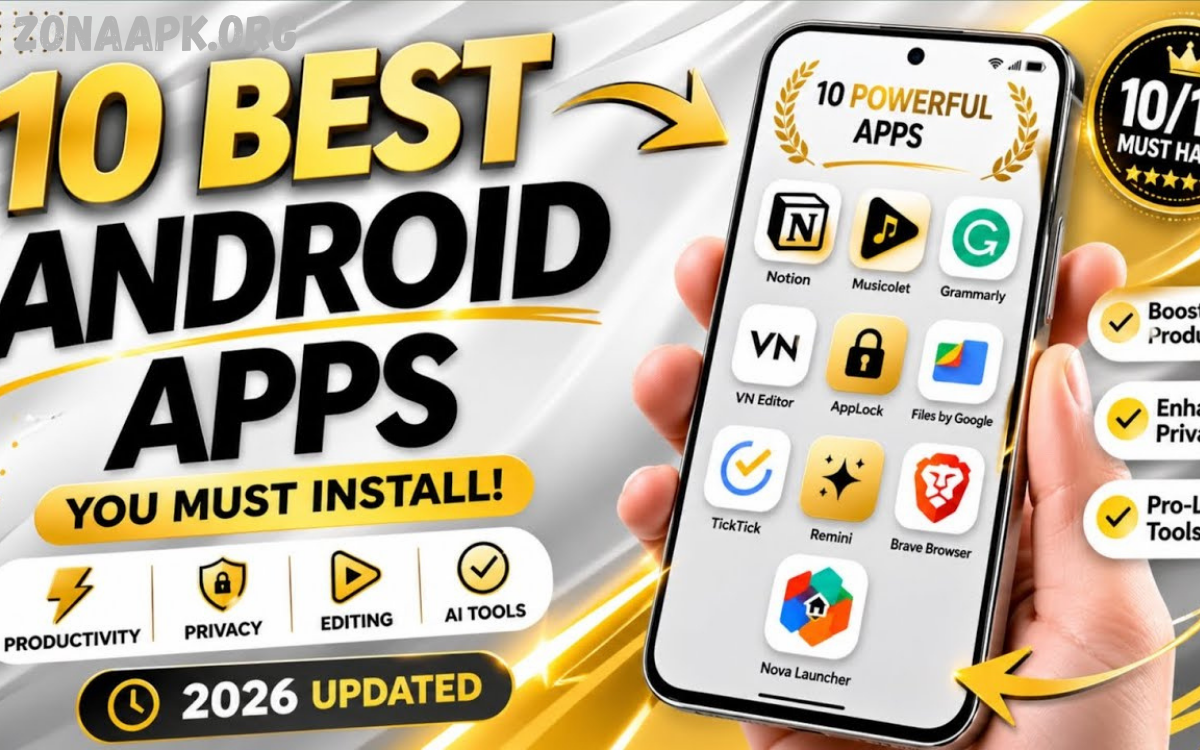
Android apps continue to play a central role in how people manage work, communication, entertainment, and daily life. With smartphones now functioning as primary computing devices for many users, the concept of “must-have apps” has shifted toward tools that improve efficiency, security, and personalization rather than just basic utility.
Modern Android ecosystems are built around productivity apps that integrate AI-driven assistance, smart scheduling, and cross-device synchronization. These tools help users manage tasks, automate workflows, and reduce time spent on repetitive actions. Communication apps have also evolved, offering richer collaboration features such as real-time translation, advanced video conferencing, and secure file sharing.
Evolution of Android Apps in 2026
Android applications have transitioned from standalone utilities into interconnected ecosystems. Instead of single-purpose tools, modern apps now integrate cloud synchronization, AI assistance, predictive analytics, and cross-device continuity.
Key transformations include:
- AI-driven automation replacing manual input tasks
- Unified digital identity systems across apps
- Real-time collaboration features for remote environments
- Strong encryption standards for personal and financial data
- Context-aware interfaces adapting to user behavior
These advancements define what qualifies as must-have Android apps in 2026, shifting focus from quantity of apps to strategic utility.
Productivity Apps: Core of Modern Android Usage
Productivity tools dominate the Android landscape in 2026. These apps support task management, workflow automation, and professional communication.
Key Features in Productivity Apps:
- AI scheduling assistants
- Smart task prioritization systems
- Voice-to-task conversion
- Cross-platform synchronization
- Real-time collaboration dashboards
Modern productivity apps eliminate fragmented workflows by centralizing tasks into unified dashboards. Professionals rely on these tools to manage projects, deadlines, and communication without switching platforms.
Communication Apps: Real-Time Global Connectivity
Communication applications in 2026 extend far beyond messaging. They function as integrated collaboration environments combining chat, video, file transfer, and translation.
Key Innovations:
- AI-based real-time language translation
- Ultra-low latency video conferencing
- Smart message summarization
- Context-aware reply suggestions
- End-to-end encrypted group collaboration
These improvements allow individuals and organizations to operate seamlessly across global networks. Communication apps now replace traditional email workflows in many professional environments.
Security and Privacy Apps: Digital Protection Layer
Security has become one of the most critical aspects of mobile usage. With increasing cyber threats, Android users require advanced protection systems.
Essential Security Functions:
- Multi-factor authentication managers
- Biometric identity verification systems
- Secure password vaults
- Encrypted file storage
- Real-time malware detection
Privacy-focused apps also provide detailed permission tracking, allowing users to control how applications access personal data.
Finance and Banking Apps: Digital Economy Control
Financial management applications have become highly sophisticated. They now support complete financial ecosystems, including banking, investing, budgeting, and payments.
Core Features:
- Instant mobile payments
- AI-powered expense tracking
- Investment portfolio monitoring
- Cryptocurrency integration
- Smart budgeting recommendations
These apps reduce dependency on traditional banking systems by providing real-time financial control. Users can analyze spending behavior, optimize savings, and execute transactions instantly.
Read Also: AI Art Generator Free Tools – Complete Professional Guide for Creative Image Generation
Health and Fitness Apps: Intelligent Wellness Systems
Health-focused Android applications have expanded into predictive wellness platforms. They integrate wearable devices, biometric sensors, and AI analytics.
Capabilities Include:
- Heart rate and sleep monitoring
- Personalized fitness coaching
- Nutrition tracking systems
- Mental health support modules
- Predictive health alerts
Instead of static tracking, these apps now provide adaptive recommendations based on lifestyle patterns.
Entertainment and Media Apps: Personalized Digital Experience
Entertainment apps in 2026 rely heavily on AI-driven personalization. Content delivery is no longer generic but tailored to individual preferences.
Major Features:
- AI-curated video and music feeds
- Adaptive recommendation engines
- Offline content optimization
- Interactive streaming environments
- Immersive augmented reality media
These platforms prioritize engagement through precision targeting, ensuring users receive relevant content with minimal effort.
Cloud Storage and File Management Apps
As data generation increases, cloud-based storage apps have become essential for both personal and professional users.
Key Functions:
- Real-time file synchronization
- Cross-device access control
- Automated backup systems
- Secure sharing permissions
- AI-based file organization
These apps eliminate dependence on local storage while improving accessibility and collaboration.
AI Assistant Apps: Smart Digital Companions
Artificial intelligence plays a central role in Android applications. AI assistant apps now operate as personalized digital companions capable of handling complex tasks.
Core Capabilities:
- Natural language task execution
- Smart reminders and planning
- Context-aware recommendations
- Document summarization
- Real-time decision support
These assistants integrate across all app categories, improving efficiency and reducing cognitive load.
Navigation and Travel Apps: Intelligent Mobility Systems
Modern navigation apps extend beyond maps. They integrate traffic prediction, route optimization, and travel planning.
Features Include:
- Real-time traffic forecasting
- AI-optimized route selection
- Public transport integration
- Travel cost estimation
- Offline navigation capabilities
These tools improve mobility efficiency for urban and international travel.
Within must have Android apps by 2026, navigation systems support smarter and faster movement decisions.
Utility Apps: Everyday Digital Efficiency
Utility applications provide small but essential functions that improve daily smartphone usability.
Common Utility Tools:
- QR and document scanners
- Battery optimization systems
- Device cleanup and performance boosters
- Automation tools for repetitive tasks
- Smart notification managers
While simple in concept, these apps significantly enhance device performance and user experience.
They remain quietly essential in the broader set of must-have Android apps 2026.
Emerging Trends in Android Apps 2026
Several key trends define the future direction of Android applications:
- Deep AI integration across all app categories
- Minimalist interfaces driven by voice and gesture control
- Decentralized data storage systems
- Cross-platform ecosystem unification
- Predictive automation replacing manual input
These trends highlight a shift toward intelligent, self-managing applications that require less user intervention.
Frequently Asked Questions
What must-have Android apps are for 2026?
Must-have Android apps 2026 are essential mobile applications that support productivity, communication, security, finance, health, and entertainment. These apps are designed with AI integration, automation, and cross-device synchronization to improve daily digital use.
Why are Android apps important in 2026?
Android apps are important in 2026 because smartphones function as primary digital devices. Apps now handle work tasks, financial management, communication, and personal organization. They increase efficiency and reduce dependency on traditional desktop systems.
Which category of apps is most important in 2026?
Productivity and security apps are considered most important. Productivity apps manage workflows and tasks, while security apps protect personal data, passwords, and online transactions from cyber threats.
Are AI-based apps part of the must-have Android apps in 2026?
Yes, AI-based apps are a major part of the must-have Android apps 2026. They assist with scheduling, content creation, real-time translation, smart recommendations, and automated task management.
Do I need security apps on Android in 2026?
Yes, security apps are essential. They provide encryption, malware protection, password management, and identity verification to safeguard personal and financial information.
What are the best Android apps for productivity?
Best productivity apps include task managers, AI assistants, note-taking tools, cloud collaboration platforms, and smart calendar apps. These tools help organize work efficiently and improve time management.
Conclusion
The landscape of must-have Android apps 2026 reflects a highly integrated digital ecosystem driven by intelligence, security, and personalization. Productivity, communication, finance, health, entertainment, and AI-driven tools collectively define modern smartphone functionality.
Users no longer depend on isolated applications. Instead, they rely on interconnected systems that adapt to behavior, anticipate needs, and enhance efficiency across every aspect of daily life.
