

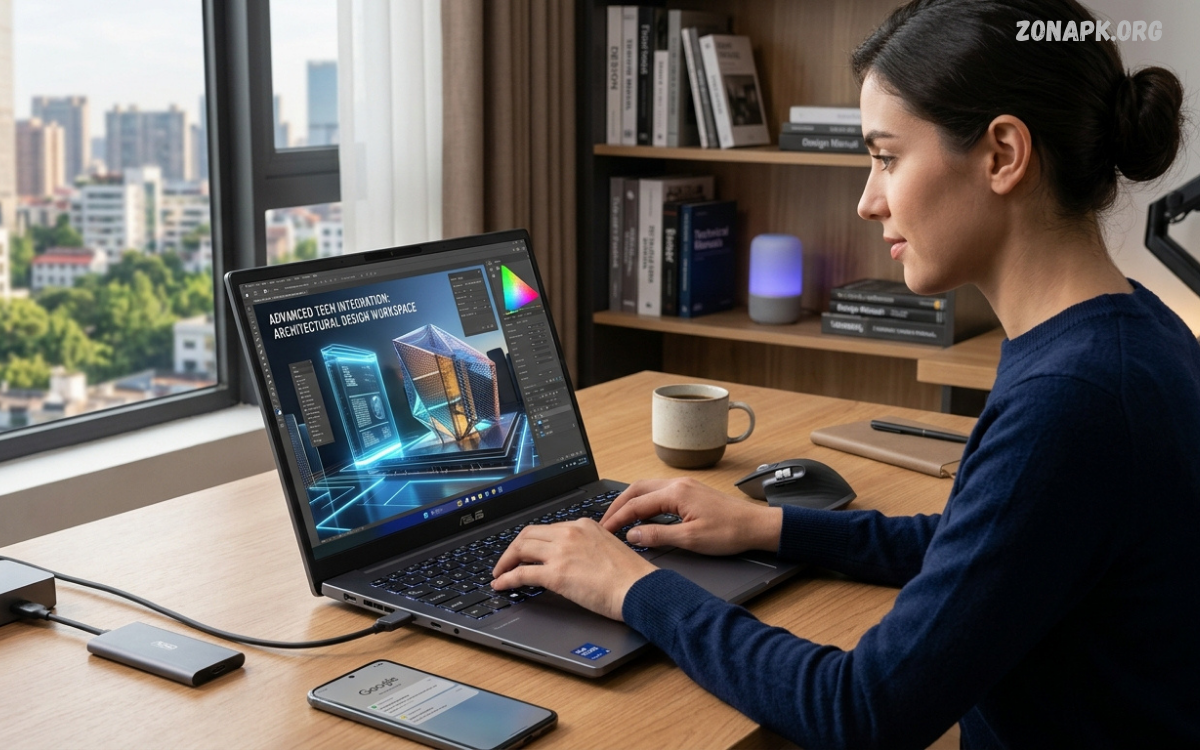
Laptop Technology has transformed personal computing by combining processing power, portability, connectivity, and intelligent features within compact devices.
Advances in processors, displays, storage, memory, batteries, wireless connectivity, and artificial intelligence continue to redefine laptop performance. Understanding these developments helps users identify the technologies shaping modern laptops and the features influencing everyday computing.
What Is Laptop Technology?
Laptop Technology refers to the hardware, software, connectivity systems, and engineering innovations used to create portable computers. A modern laptop integrates a processor, memory, storage, display, battery, motherboard, wireless components, input devices, cooling hardware, and operating system.
Modern Laptop Technology focuses on balancing performance with portability, battery efficiency, thermal management, durability, and user experience.
Evolution of Laptop Technology
Early portable computers focused primarily on basic productivity, text processing, and simple software applications. Their hardware offered limited processing power, modest displays, short battery endurance, and considerable physical weight compared with modern notebook computers.
Laptop Technology gradually advanced through improvements in semiconductor manufacturing, battery chemistry, display engineering, storage, wireless communication, and system design.
Modern Laptop Processors
Processors are among the most important components in modern laptops because they handle the instructions required by applications, operating systems, and background services.
Modern Laptop Technology increasingly uses multi-core processors that distribute workloads across multiple processing units.
Artificial Intelligence in Laptops
Artificial intelligence has become a major development in laptop technology, especially with dedicated hardware designed for AI workloads. Neural processing units can accelerate selected machine-learning tasks while reducing reliance on traditional processor resources.
AI-enabled laptops can support features such as intelligent image processing, background effects during video calls, speech processing, content creation tools, and productivity assistance. As software ecosystems mature, AI hardware may become increasingly integrated into ordinary laptop workflows.
Laptop Display Technology
Display technology strongly influences how users interact with laptops. Modern systems commonly use high-resolution panels with improved brightness, contrast, viewing angles, refresh rates, and color reproduction for productivity, entertainment, gaming, and creative applications.
Laptop Technology has introduced several display improvements, including OLED panels, high-refresh-rate screens, adaptive refresh technologies, and narrow-bezel designs.
Laptop Storage Technology
Storage determines how quickly a laptop can access operating-system files, applications, projects, media, and personal documents.
Modern Laptop Technology increasingly relies on high-speed NVMe storage connected through PCI Express interfaces.
Laptop Memory and Multitasking
Random access memory plays a major role in multitasking because active applications require temporary working space. More memory lets users keep multiple applications, browser tabs, documents, creative tools, and communication platforms active at the same time.
Laptop Technology has progressed toward faster and more efficient memory standards, improving bandwidth and power efficiency.
Graphics Technology in Laptops
Graphics processing technology handles visual workloads ranging from ordinary desktop rendering to professional 3D production and modern gaming. Some laptops use integrated graphics built into the processor, while performance-oriented systems may include dedicated graphics processors.
Modern Laptop Technology combines improved graphics architectures with advanced memory systems and software optimization.
Battery Technology and Efficiency
Battery technology directly affects laptop portability because users depend on stored electrical energy when operating away from a power outlet. Improvements in battery design, processor efficiency, display management, and operating-system optimization have helped increase practical runtime.
Laptop Technology increasingly emphasizes energy-efficient components rather than relying only on larger batteries.
Laptop Cooling Technology
Efficient cooling is essential because processors and graphics components generate heat during demanding workloads. Laptops use combinations of heat pipes, vapor chambers, fans, thermal materials, and carefully designed airflow systems to transfer heat away from critical components.
Modern laptop technology pays close attention to thermal design because sustained workloads can raise internal temperatures. Effective cooling helps maintain stable performance, reduce excessive fan noise, and protect hardware from prolonged thermal stress during demanding computing sessions.
Wireless Connectivity
Wireless connectivity has become a fundamental part of modern laptop design. Wi-Fi enables internet access, cloud services, online communication, streaming, remote collaboration, and network-based applications without requiring physical Ethernet connections.
Bluetooth technology provides connections for compatible peripherals such as keyboards, mice, headphones, controllers, and other devices. Laptop Technology continues to improve wireless speed, reliability, latency, and energy efficiency as users increasingly depend on wireless ecosystems.
USB and Modern Ports
Physical ports remain important despite the growth of wireless connectivity and cloud computing. USB interfaces support external storage, displays, input devices, charging accessories, docking stations, cameras, and many other peripherals.
Modern Laptop Technology increasingly uses versatile USB-C connections, with some systems supporting high-speed data transfer, display output, and power delivery through the same connector.
Laptop Security Technology
Security technology protects devices, accounts, files, applications, and sensitive information against unauthorized access. Modern laptops can include fingerprint readers, biometric authentication, secure processors, encrypted storage, firmware protections, and operating-system security features.
Laptop Technology also uses hardware-based security mechanisms to establish trusted computing environments. Secure authentication and encryption can help protect personal and professional data, while regular software updates remain important for addressing newly discovered security vulnerabilities.
Laptop Build Quality and Materials
Laptop construction affects durability, portability, weight, thermal behavior, and appearance. Manufacturers use materials such as aluminum alloys, magnesium alloys, reinforced polymers, carbon-based composites, and other engineered materials across different product categories.
Premium Laptop Technology often combines rigid construction with thin profiles and carefully engineered hinges. Business-oriented laptops may emphasize durability and serviceability, while lightweight consumer systems may prioritize portability and compact design for users who travel frequently.
Touchscreens and Input Technology
Touchscreen laptops provide an additional interaction method alongside traditional keyboards and trackpads. Touch input can help with navigation, drawing, presentations, creative applications, and tablet-style workflows on convertible devices.
Laptop Technology also includes improved touchpads, precision gesture recognition, backlit keyboards, digital pens, and adaptive input systems. These technologies allow laptops to support different interaction styles while maintaining the productivity advantages of a conventional computer.
Laptop Technology for Students
Students use laptops for research, writing, online classes, presentations, programming, collaboration, and multimedia projects. A suitable device generally requires dependable performance, comfortable input hardware, sufficient storage, reliable connectivity, and practical battery endurance.
Modern Laptop Technology gives students access to lightweight computers that can handle educational software and cloud-based applications.
Laptop Technology for Professionals
Professionals rely on laptops for communication, productivity, project management, data analysis, programming, presentations, design, and remote collaboration. Business laptops often emphasize reliability, security, portability, connectivity, and long-term usability.
Laptop Technology has also enabled flexible working environments by combining powerful hardware with cloud platforms and high-speed connectivity. Employees can access business applications, shared documents, communication platforms, and remote systems from multiple locations.
Laptop Technology for Creators
Creative professionals require specialized hardware for tasks such as video editing, photography, animation, music production, graphic design, and 3D modeling. These workflows can place significant demands on processors, graphics processors, memory, storage, and display systems.
Modern Laptop Technology supports creative workflows through high-resolution displays, accurate color reproduction, powerful graphics hardware, fast storage, and efficient processors. Portable workstations let creators handle demanding tasks without relying entirely on stationary desktop systems.
Read Also: Smartphone Features: Key Technologies Shaping Modern Devices
Laptop Technology for Gaming
Gaming laptops combine high-performance processors, dedicated graphics hardware, high-refresh-rate displays, advanced cooling, and fast memory. These components work together to process complex game environments while maintaining responsive visual performance.
Gaming-focused Laptop Technology continues to develop through improved graphics architectures, display technologies, cooling systems, and performance management. Modern gaming laptops can also support content creation, streaming, programming, and other demanding workloads.
Cloud Computing and Laptops
Cloud computing has changed how laptops store, process, synchronize, and access information. Users can work with online documents, remote applications, cloud storage, collaboration platforms, and web-based services without keeping every resource locally.
Laptop Technology benefits from cloud integration because lightweight devices can access powerful online services through reliable internet connections. Cloud synchronization also helps users maintain access to files across multiple compatible devices and locations.
Operating Systems and Laptop Technology
Operating systems provide the software foundation connecting laptop hardware with applications and users. They manage memory, storage, processors, security, networking, peripherals, updates, and user interfaces.
Laptop Technology evolves alongside operating-system development because new hardware features often require software support. Modern operating systems increasingly integrate AI capabilities, security controls, energy-management tools, accessibility features, and improved device-management systems.
Sustainable Laptop Technology
Sustainability has become an increasingly important consideration in computer manufacturing. Manufacturers are exploring recycled materials, lower-energy components, efficient packaging, longer product lifecycles, repairability, and responsible manufacturing practices.
Sustainable Laptop Technology can reduce environmental impact through efficient energy consumption and longer hardware usability. Modular components, replaceable parts, software support, and responsible recycling can also extend the useful life of computing devices.
Future of Laptop Technology
Future Laptop Technology is expected to focus on improved AI processing, energy efficiency, connectivity, displays, battery systems, security, and lightweight construction. Computing hardware will continue moving toward specialized processing architectures designed for different workloads.
Emerging designs may also introduce more advanced adaptive displays, intelligent power management, improved wireless communication, and deeper integration between local and cloud computing. The overall direction remains focused on delivering greater capability without sacrificing portability.
How to Choose Modern Laptop Technology
Choosing a laptop means matching hardware capabilities to actual computing needs. Consider processor performance, memory, storage, display quality, battery endurance, graphics capability, connectivity, keyboard comfort, operating system, build quality, and security features.
Evaluate laptop technology based on workload rather than specifications alone. A student may prioritize portability and battery life, while a developer, designer, gamer, or video editor may require stronger processing, graphics, memory, storage, and cooling capabilities.
Importance of Laptop Technology in Daily Life
Laptops have become important tools for education, employment, communication, entertainment, creativity, research, and personal organization. Their portable design lets users work across homes, offices, classrooms, libraries, and travel environments.
Laptop Technology continues to reduce the gap between desktop-class capabilities and portable computing. Improvements in processors, displays, storage, wireless communication, and energy efficiency allow modern laptops to support increasingly complex digital activities.
Frequently Asked Questions
What is Laptop Technology?
Laptop Technology includes the hardware, software, connectivity, power systems, security features, and engineering methods used in portable computers. It covers processors, memory, storage, displays, batteries, cooling systems, wireless communication, operating systems, and input devices.
Why is Laptop Technology important?
Laptop Technology makes powerful computing available in portable formats suitable for education, business, entertainment, communication, programming, and creative work. Hardware improvements allow modern laptops to perform tasks that once required larger desktop systems.
How does AI improve Laptop Technology?
AI-focused hardware can accelerate selected machine-learning workloads directly on a laptop. Dedicated processing units can handle certain AI tasks efficiently while allowing the main processor and graphics hardware to focus on other operations.
What makes a laptop fast?
Laptop speed depends on several components, not a single specification. Processor architecture, processor cores, memory capacity, storage technology, graphics hardware, cooling, and software optimization can all affect perceived and measured performance.
How does laptop battery technology work?
Laptop batteries store electrical energy that powers the system when it is disconnected from an external power source. Battery runtime depends on capacity, processor efficiency, display characteristics, workload, wireless activity, background applications, and power-management settings.
Are OLED displays useful for laptops?
OLED displays can deliver strong contrast, deep blacks, fast response times, and vibrant image reproduction. These qualities can benefit entertainment, creative work, photography, and users who value display quality.
What role does SSD storage play in laptops?
Solid-state storage provides fast access to operating-system files, applications, documents, and media. Compared with traditional mechanical storage, SSDs generally offer lower access latency and faster responsiveness.
How does Laptop Technology support remote work?
Laptops combine portable hardware with wireless connectivity, cloud platforms, communication applications, security tools, and collaboration software. This combination allows users to access work resources from locations outside traditional offices.
What is the future of Laptop Technology?
Future Laptop Technology is likely to emphasize AI processing, energy efficiency, advanced connectivity, improved displays, stronger security, and increasingly efficient hardware. Specialized processors may become more important as software uses AI and machine-learning features.
How should users evaluate Laptop Technology?
Users should evaluate laptop technology based on their actual needs rather than focusing on individual specifications. Consider processor performance, memory, storage, graphics, display, battery, connectivity, security, portability, and build quality together.
Conclusion
Modern laptops provide productivity ecosystems that combine hardware performance with software automation and cloud collaboration. Users can manage documents, meetings, projects, communications, research, data, and creative work through a single portable platform.
AI acceleration may further improve productivity by assisting with selected repetitive or computational tasks. Laptop Technology therefore represents more than physical hardware; it combines processing, software, connectivity, security, and intelligent features into an integrated computing environment.
